










Peripheral Artery Disease
Peripheral vascular disease refers to circulatory system diseases that occur as a result of narrowing, blockage, or structural deterioration of the vessels located outside the heart and brain. The arteries that carry blood to the legs and feet are particularly often affected. Arterial hardening, which develops due to the accumulation of cholesterol and fat in the vessel wall, is among the most important causes of peripheral arterial disease. The disease may not cause symptoms in its early stages, and various complaints related to circulatory disorders may develop over time.
In peripheral vascular disease, leg pain while walking, rapid fatigue, numbness, cold feet, and changes in skin color may occur. In advanced stages, pain at rest, non-healing wounds, and tissue loss may develop. Smoking, diabetes, high blood pressure, high cholesterol, obesity, a sedentary lifestyle, and advanced age are important risk factors. In diagnosis, the patient's complaints and physical examination are used, along with Doppler ultrasound and, when necessary, advanced vascular imaging methods. Treatment can be planned with medication, lifestyle changes, endovascular interventions, or surgical methods, depending on the level of the disease and the person's overall health status.
What Causes Peripheral Artery Disease?
The most common cause of peripheral vascular disease is atherosclerosis, namely arterial hardening. Over time, plaques made up of fat, cholesterol, and other substances can accumulate on the inner surface of the vessels. Growth of these plaques causes the vessel diameter to narrow and reduces the amount of blood reaching the tissues.
Risk Factors for Peripheral Artery Disease
- Smoking
- Diabetes
- High blood pressure
- High cholesterol
- Excess weight and obesity
- Sedentary lifestyle
- Advanced age
- A family history of vascular disease
- Presence of heart and vascular diseases
In addition, some vascular inflammations, blood clots, vascular injuries, and rarer vascular diseases can also cause peripheral circulatory disorders. Blockages that develop suddenly may rank among the emergencies that require rapid evaluation and treatment.
What Are the Symptoms of Peripheral Artery Disease?
The symptoms of peripheral vascular disease may vary depending on the degree of arterial narrowing and the affected area. Especially when the leg vessels are affected, one of the first noticed complaints is pain that occurs while walking. As the disease progresses, symptoms can also appear at rest.
Symptoms That Appear When Leg Vessels Are Affected
- Pain in the calf, thigh, or hip while walking
- Leg pain that decreases with rest and returns when walking again
- Rapid fatigue and weakness in the legs
- Coldness or numbness in the feet
- Pallor or bluish discoloration of the skin
- Decreased leg hair and thinning of the skin
- Slow-healing wounds on the feet and legs
- In advanced stages, pain at rest or at night
Peripheral vascular disease does not only affect the legs. Depending on the affected vascular area, signs of circulatory disorders can also be seen in the arms, hands, or other tissues. Findings such as severe and sudden pain, coldness, discoloration, or pronounced numbness may indicate an acute vascular blockage, so medical evaluation should be performed without delay.
How Is Peripheral Artery Disease Diagnosed?
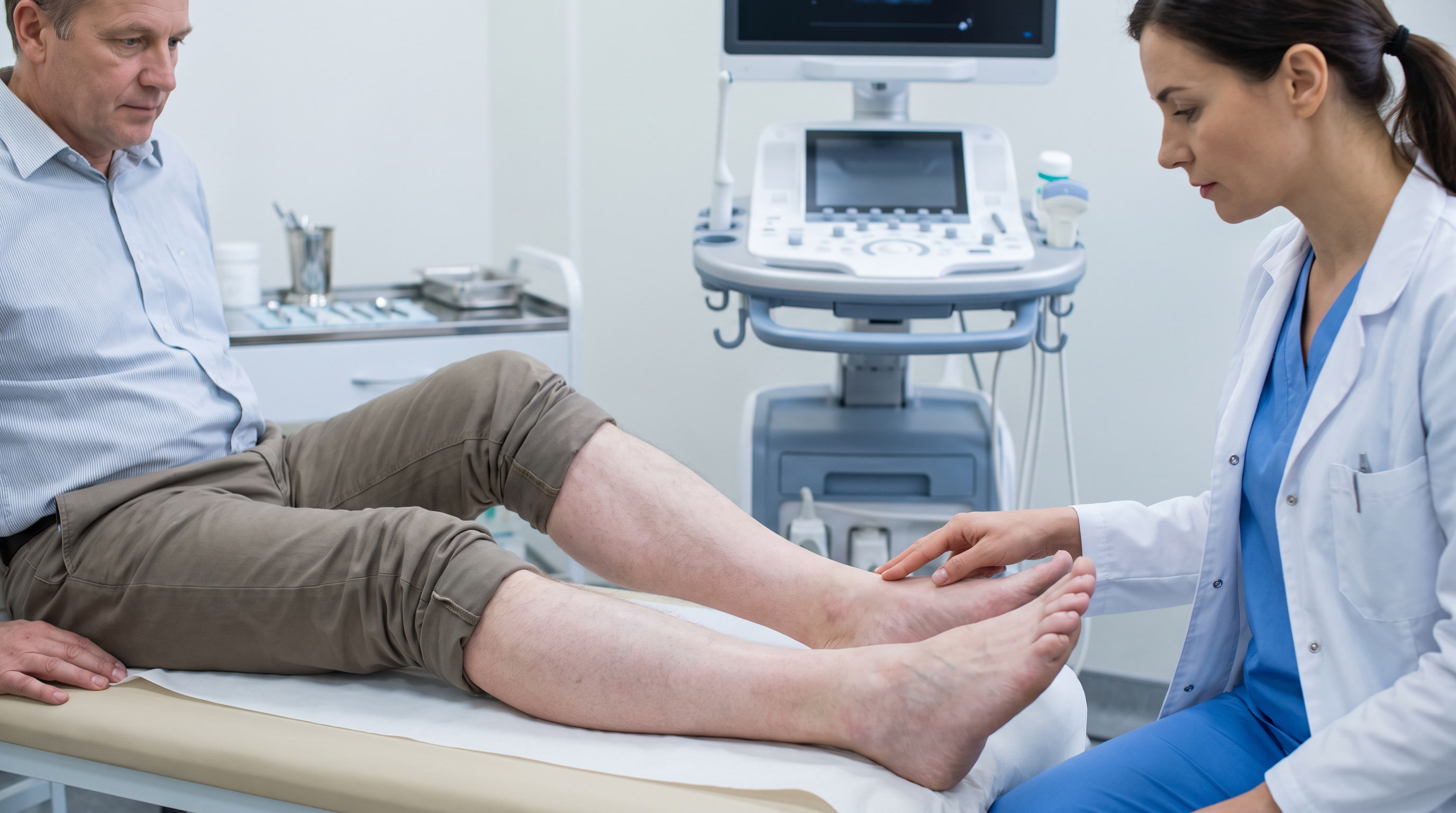
During the diagnostic process, the patient's complaints, medical history, and risk factors for vascular disease are first assessed. During the physical examination, pulses in the arms and legs are checked, and the structure and color of the skin are examined. When deemed necessary, various tests are performed to evaluate blood circulation.
Methods Used in Diagnosis
Color Doppler ultrasound is one of the frequently used methods for evaluating peripheral vessels. It provides information about the structure of the vessels, areas of narrowing or blockage, and the characteristics of blood flow. Because the procedure is non-invasive, it is preferred as one of the first imaging methods in many patients.
When necessary, information about blood flow in the legs can be obtained through circulatory tests such as the ankle-brachial index. When more detailed vascular imaging is required, computed tomography angiography or MR angiography can be used. Conventional angiography may also be performed when needed for treatment planning.
During diagnosis, not only the presence of blockage but also the extent of the vascular disease, the degree to which blood flow is reduced, and whether the patient carries a risk of tissue loss are evaluated.
How Is Peripheral Artery Disease Treated?
The treatment of peripheral vascular disease is planned according to the severity of the disease, the characteristics of the affected vessels, and the patient's overall health status. The main goals of treatment are to improve circulation, reduce complaints, prevent the progression of the disease, and, when necessary, reduce the risk of tissue loss.
Medication and Lifestyle Adjustments
In suitable patients, treatments for the control of cholesterol, blood pressure, and blood sugar may be applied. Depending on the doctor's assessment, medications that affect blood clotting or reduce the risk of cardiovascular events related to vascular disease may also be used.
Quitting smoking, regular physical activity, a balanced diet, and maintaining a healthy body weight are important parts of the treatment. Regular walking programs carried out under medical supervision, particularly in suitable patients, can help increase walking distance and improve the quality of daily life.
Interventional and Surgical Treatments
Vessel-opening procedures may be considered in suitable patients who have significant arterial narrowing or blockage and whose complaints persist despite medication and lifestyle adjustments. With angioplasty, the narrowed vascular segment can be widened with the help of a balloon. In some cases, a stent may be placed to keep the vessel open.
Depending on the characteristics of the vascular blockage and the patient's vascular structure, surgical treatments can also be applied. Bypass surgery is based on creating a new vascular route that allows blood to pass around the blocked vascular segment. Which treatment is appropriate is determined by jointly evaluating the vascular imaging results and the patient's clinical condition.
When peripheral vascular disease is detected at an early stage, there are effective options for keeping the progression of the disease under control. Especially recurring leg pain while walking, cold feet, numbness, or non-healing wounds should not be ignored. Early diagnosis and appropriate treatment contribute not only to preserving leg circulation but also to evaluating the person's overall heart and vascular health.