










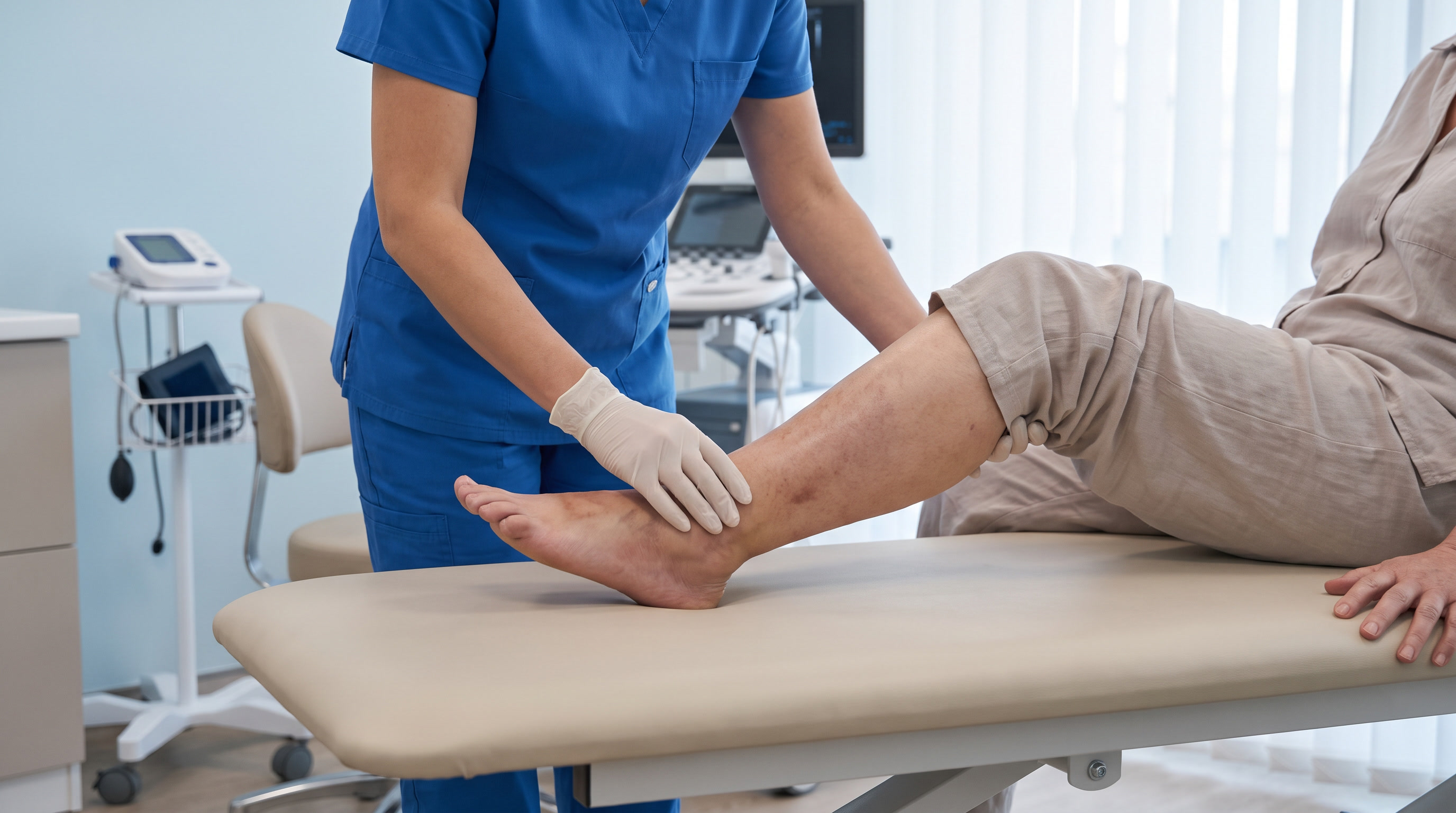
Venous Insufficiency
Venous insufficiency is a circulatory problem that occurs when the leg veins cannot carry blood toward the heart sufficiently. The valves found in healthy veins help prevent blood from leaking back toward the legs under the effect of gravity. If the function of these valves deteriorates, blood can accumulate in the leg veins, causing the pressure inside the vein to rise. Over time, complaints such as swelling, pain, a feeling of heaviness, fatigue and skin changes can develop in the legs.
Venous insufficiency can be associated with various factors such as standing for a long time, a sedentary lifestyle, excess weight, pregnancy, advancing age and venous diseases. While the disease progresses with mild symptoms in some people, in advanced cases skin discoloration, hardening and hard-to-heal wounds can be seen. In the diagnostic process, color Doppler ultrasonography has an important place in addition to physical examination. Treatment is planned according to the level of the disease and the condition of the veins. Increasing movement, weight control and the use of compression stockings in suitable patients can support treatment. When necessary, endovascular interventions or surgical methods can also be applied.
Why Does Venous Insufficiency Occur?
At the basis of venous insufficiency lies the deterioration of the mechanism that ensures blood in the leg veins is carried toward the heart. The valves located inside the veins normally help blood progress in one direction. If the valves are damaged or do not close sufficiently, blood leaks backward and can begin to pool in the legs.
Structural changes occurring in the vein walls can also play a role in the development of venous insufficiency. A previously experienced venous clot can damage the structure of the veins and lead to circulatory problems in the long term. In addition, staying still for a long time or standing can increase venous pressure in the legs.
Factors that increase the risk of venous insufficiency
- Standing for a long time
- Sitting still for a long time
- Excess weight and obesity
- Advanced age
- Pregnancy
- A family history of venous disease
- Having previously had deep vein thrombosis
- A sedentary lifestyle
The presence of more than one risk factor can increase the likelihood of developing venous insufficiency. Therefore, it is important especially for people who work standing or sitting for a long time to move regularly.
What Are the Symptoms of Venous Insufficiency?
The symptoms of venous insufficiency can vary depending on the degree of the disease and the extent of the involvement in the venous system. In the initial period, complaints may be mild and may become more pronounced especially in the later hours of the day. When standing for a long time, a feeling of fullness or heaviness in the legs may increase.
Among the most commonly seen symptoms are swelling in the legs, pain, fatigue, a feeling of heaviness and night cramps. Swelling around the ankle may increase during the day and may decrease after resting or elevating the legs. Itching and a feeling of tightness in the skin may also be seen.
Symptoms of advanced venous insufficiency
As the disease progresses, discoloration may occur in the skin of the legs. Especially around the ankle, darkening, hardening and dryness of the skin may be seen. In advanced cases, wounds called venous ulcers, which can take a long time to heal, can occur due to the impairment in venous circulation.
When symptoms such as sudden severe pain, prominent swelling, redness or increased temperature in the leg occur, the situation should not be evaluated as venous insufficiency alone. In such complaints, it is important for a doctor to perform a rapid evaluation.
How Is Venous Insufficiency Diagnosed?
In the diagnosis of venous insufficiency, first the patient's complaints and medical history are evaluated. During the physical examination, swelling in the legs, skin changes, varicose veins and other circulatory findings are examined. Imaging methods can be used to support the diagnosis and evaluate the working pattern of the veins.
Color Doppler ultrasonography is one of the most commonly used examinations in the diagnosis of venous insufficiency. Through this method, the structure of the veins, the direction of blood flow and the function of the valves can be evaluated. It also helps determine in which veins the problem is present.
Why is Doppler ultrasonography important?
Doppler examination not only evaluates the presence of venous insufficiency but also provides information about the superficial and deep venous systems. Especially when planning treatment, it is important to determine which veins are affected.
When necessary, different imaging methods or additional tests can be used. The diagnostic process is planned individually in line with the patient's complaints and examination findings.
How Is Venous Insufficiency Treated?
The treatment of venous insufficiency is determined according to the severity of the disease, the symptoms and the condition of the veins. The main goals of treatment are to support blood circulation in the legs, reduce complaints and prevent skin problems that may occur due to the progression of the disease.
In mild and moderate cases, lifestyle changes are an important part of treatment. Appropriate physical activities such as regular walking can enable the calf muscles to support venous circulation. Avoiding staying still for a long time, maintaining a healthy body weight and elevating the legs appropriately while resting can also be beneficial.
Compression stockings and interventional treatments
In patients deemed suitable by the doctor, compression stockings can be used. These products aim to help the veins carry blood toward the heart by applying controlled pressure to the legs. The pressure level and duration of use of the product to be used should be determined according to the person's condition.
In patients with significant venous insufficiency who meet the appropriate criteria, endovascular treatments can be applied. Methods such as sclerotherapy, endovenous laser and radiofrequency can be used in the treatment of certain venous problems. In more advanced cases or those with different anatomical characteristics, surgical treatment can be considered.
Venous insufficiency is a chronic circulatory problem whose symptoms can be brought under control when it is recognized at an early stage and followed up appropriately. It is important for people who experience persistent swelling, pain, a feeling of heaviness or skin changes in the legs to receive an expert evaluation. Early diagnosis and an individualized treatment approach can help prevent complications related to the disease.