










Heart Valve Disease
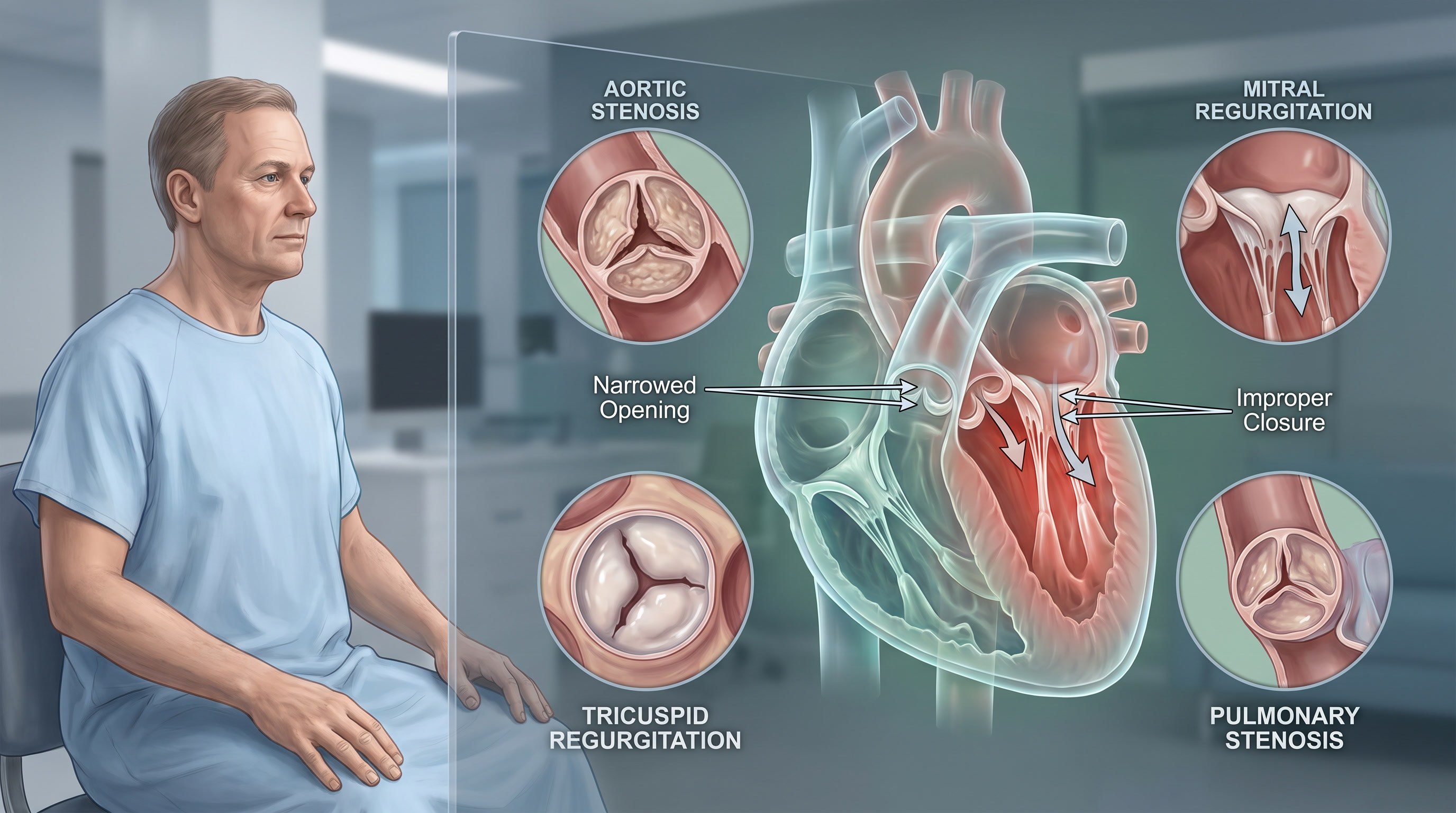
Heart valve disease refers to health problems that develop as a result of structural or functional disorders of the valves in the heart. The heart contains four main valves that keep blood flowing in the correct direction: the mitral, aortic, tricuspid and pulmonary valves. When one of these valves does not open fully or fails to close completely, the heart's ability to pump blood to the body can be impaired. Depending on the type and stage of the disease, symptoms such as shortness of breath, palpitations, weakness, chest discomfort and reduced exercise capacity may appear. Some valve diseases can progress for a long time without causing any symptoms and may be noticed during a routine examination.
Congenital structural problems, age-related changes, infections, rheumatic diseases and certain cardiovascular disorders can play a role in the development of heart valve disease. Along with the doctor's examination, imaging methods such as echocardiography are used during the diagnostic process. Treatment is planned according to the type of disease, the extent to which the valve is affected and the person's overall health. While regular follow-up may be sufficient in mild cases, options such as medication, valve repair or valve replacement may be considered in advanced valve disease.
What Causes Heart Valve Disease?
The causes of heart valve disease are quite varied. In some people, a defect in the valve structure may be present from birth. In addition, calcification and structural changes can develop in the valves with advancing age. In particular, narrowing of the aortic valve is one of the valve problems seen more often in advanced age.
Certain past infections and conditions such as rheumatic fever can also affect the structure of the heart valves. Moreover, some diseases affecting the heart muscle or the blood vessels can, due to enlargement of the heart, lead to a disruption of the normal functioning of the valves.
Conditions that increase the risk of valve disease
- Congenital heart and valve anomalies
- Advanced age
- Heart infections
- History of rheumatic fever
- Heart muscle diseases
- Certain cardiovascular diseases
- Previous heart valve operations
Since the cause of every valve disease is not the same, it is important to evaluate the person's medical history in detail during the diagnostic and treatment process.
What Are the Symptoms of Heart Valve Disease?
The symptoms of heart valve disease can vary depending on which valve is affected and the severity of the disease. In mild valve problems, the person may not experience any complaints. As the disease progresses, the heart may have to work harder, and symptoms noticed in daily life may appear.
Among the most common symptoms are shortness of breath, easy fatigue, weakness, palpitations and reduced performance during physical activity. Some people may experience chest pain or a feeling of pressure, dizziness and fainting. In advanced cases, signs related to fluid accumulation, such as swelling in the legs and ankles, may occur.
When should the symptoms be evaluated?
Complaints such as gradually increasing shortness of breath during exertion, recurrent fainting, noticeable palpitations or chest pain should not be ignored. Emergency medical evaluation is especially important for symptoms such as sudden and severe chest pain, serious shortness of breath or fainting.
How Is Heart Valve Disease Diagnosed?
In the diagnosis of heart valve disease, the person's complaints, medical history and physical examination findings are evaluated first. By listening to the heart with a stethoscope, the doctor may detect heart murmurs that can arise due to changes in the functioning of the valves. However, imaging methods are often used for a definitive evaluation.
Echocardiography is one of the most important methods for evaluating the structure and movement of the heart valves. This examination provides information about whether there is narrowing or leakage in the valves, the pumping function of the heart and the condition of the heart chambers.
Other diagnostic methods that can be used
- Electrocardiography (ECG)
- Chest X-ray
- Cardiac ultrasound and detailed echocardiography examinations
- Cardiac computed tomography or magnetic resonance imaging
- Cardiac catheterization when necessary
Which examinations are performed is determined according to the patient's symptoms, the type of valve disease and the doctor's evaluation. Regular check-ups can help monitor valve problems, especially those that have not yet caused any symptoms.
How Is Heart Valve Disease Treated?
The treatment of heart valve disease is planned according to the type and degree of the disorder affecting the valve. Not every valve disease requires surgery. In some mild, asymptomatic patients, the course of the disease can be followed with examinations and echocardiography at certain intervals.
Medication can be used in suitable patients to control symptoms or reduce the workload on the heart. However, drugs do not always eliminate the structural problem in the valve. Therefore, different treatment options are considered in people with advanced valve stenosis or leakage.
Heart valve repair and replacement
In suitable patients, heart valve repair aims to preserve the diseased valve as much as possible and restore its function. In cases where the valve cannot be repaired or is severely damaged, valve replacement may be considered. The replacement valve can be mechanical or biological in nature, and the appropriate option is determined by taking into account the patient's age, health status and other risks.
In some patients, less invasive treatment methods performed through a catheter may also be considered alongside traditional open-heart surgery. These methods can be a suitable option especially for patients with high surgical risk or certain anatomical features.
Heart valve disease is among the heart conditions that can be managed appropriately when detected early and followed regularly. It is important for people experiencing symptoms such as shortness of breath, palpitations, fainting, chest pain or unexplained fatigue to undergo a cardiology evaluation. After the diagnosis, the follow-up and treatment plan should be created specifically for the individual.