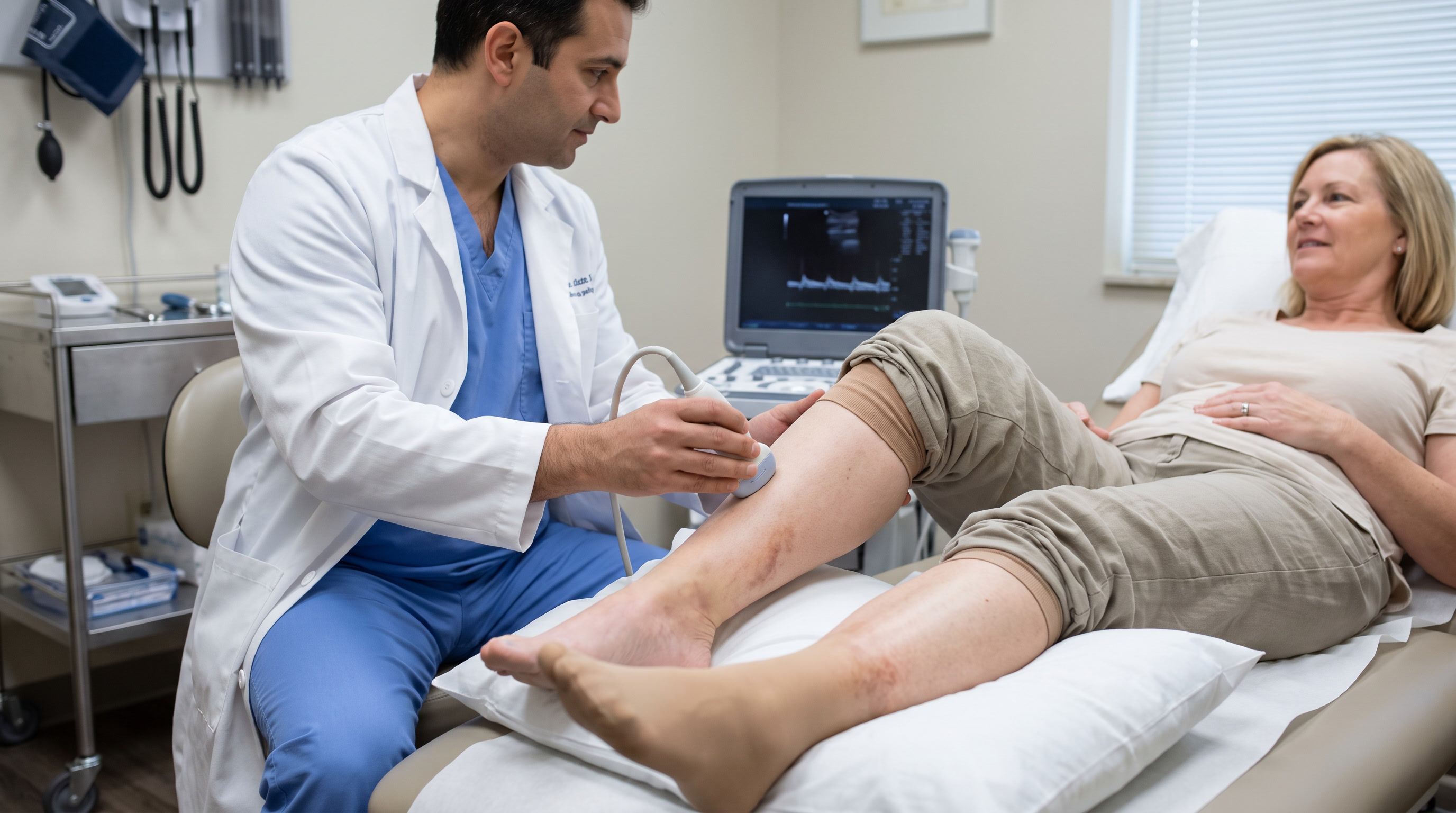
Venous Insufficiency Treatment
Venous insufficiency is a circulatory problem that occurs as a result of the leg veins not being able to carry the blood toward the heart effectively enough. The failure of the valves inside the veins to fully perform their function can cause blood to accumulate in the legs and the pressure inside the vessel to increase. While this condition initially causes complaints such as heaviness, fatigue, pain and swelling that increases in the evening hours, in later periods skin changes and wounds that are hard to heal can develop.
Venous insufficiency treatment is planned according to the degree of the disease, which vessels are affected and the person's complaints. Surgical intervention is not necessary in every patient.Lifestyle regulations and compression therapy can help control the complaints in some patients. After the evaluation of the vessel structure and the blood flow, options such as laser, radiofrequency, sclerotherapy or surgical treatment can come to the agenda in suitable patients. The main aim of the treatment is not only to reduce the symptoms but also to bring the cause of the disorder in the venous circulation under control.
Why Is Venous Insufficiency Treatment Performed?
The aim of venous insufficiency treatment is to reduce the pressure created by the blood accumulating in the leg veins, alleviate the complaints and reduce the risk of complications developing due to the progression of the disease. When preparing the treatment plan, the patient's age, general health condition, anatomical features of the vessels and existing symptoms are evaluated together.
Which Complaints Can Venous Insufficiency Cause?
The most common symptoms in venous insufficiency include a feeling of heaviness and fatigue in the legs, pain, fullness, swelling at the ankles and night cramps. The complaints can increase especially when standing for a long time or in the later hours of the day.
With the progression of the disease, color changes, itching, dryness and hardening can occur on the skin. In some patients, wounds around the ankle, called venous ulcers, that take a long time to heal can form.
What Can Happen If It Is Not Treated?
Venous insufficiency does not progress at the same rate in every patient. However, vascular insufficiency that is not kept under control for a long time can cause chronic swelling of the legs and the appearance of skin changes to become more evident. The development of clots and inflammation in the superficial vessels can also be seen in some patients.
Therefore, it is important that people with constantly ongoing swelling, evident skin changes or non-healing wounds are evaluated with respect to vascular diseases.
Which Methods Are Used in Venous Insufficiency Treatment?
The treatment method to be applied in venous insufficiency is determined according to the condition of the vessels and the level of the disease. While conservative treatments can be sufficient in some patients, interventional methods can be used in suitable patients with evident venous reflux.
Lifestyle Regulations and Compression Therapy
In mild and moderate venous insufficiency, moving regularly, avoiding long immobility and maintaining the ideal weight are important parts of the treatment process. Resting the legs appropriately during the day and walking regularly can support the venous circulation.
Compression stockings can be used in patients deemed appropriate by the doctor. Compression supports the upward movement of the blood by applying controlled external pressure to the leg veins. The pressure level of the stocking and the duration of use should be determined according to the person's vascular structure.
Laser and Radiofrequency Treatment
In suitable patients with reflux due to the malfunctioning of the valves in certain veins, endovenous laser or radiofrequency treatments can be applied. In these methods, a thin catheter is advanced into the vessel and controlled energy is given to close the problem vessel.
Blood flow is directed over time to the other veins that continue their function. These procedures are usually performed through a small entry region and can provide a shorter recovery process in suitable patients compared with classical open surgery.
Sclerotherapy and Foam Sclerotherapy
Sclerotherapy is one of the methods used especially in the treatment of smaller or medium-sized problem veins. A special drug is given into the vessel and the closure of the vein is aimed. Foam sclerotherapy, on the other hand, is based on the principle of applying the drug in foam form.
Which vessel will be treated with which method is determined after the evaluation made with color Doppler ultrasonography. In some patients, more than one treatment method can be used together.
How Is Venous Insufficiency Diagnosed?
In order to plan the venous insufficiency treatment correctly, the venous system must first be evaluated in detail. In addition to the physical examination, the patient's complaints and medical history are also taken into account.
Color Doppler Ultrasonography
Color Doppler ultrasonography is one of the most frequently used imaging methods in the evaluation of venous insufficiency. Thanks to this examination, the direction of the blood flow in the veins, the structure of the vessels and the function of the valves can be evaluated.
Whether the blood leaks backward, namely reflux, within the vessel can also be determined with the Doppler examination. In addition, the condition of the vessels can be evaluated with respect to a previous or existing clot.
How Is the Treatment Plan Determined?
When preparing the treatment plan, not only the varicose veins seen on the skin surface are focused on. The veins causing the problem must be determined and the circulatory system must be evaluated in general.
The same treatment method is not suitable for every venous insufficiency patient. The diameter of the vessel, the location of the reflux, the extent of the disease, the existing complaints and the person's general health condition are evaluated together to determine the most appropriate approach.
What Should Be Considered After Venous Insufficiency Treatment?
The process after venous insufficiency treatment can vary according to the method applied and the patient's vascular structure. After interventional procedures, it is important to comply with the movement, compression and control program recommended by the doctor.
Movement and Daily Life
After the treatment, avoiding long immobility and walking to the extent recommended by the doctor can support the venous circulation in the legs. It is especially important for people who work at a desk or travel for a long time to move at certain intervals.
In addition to physical activity, weight control can also help reduce the load on the veins. In situations requiring prolonged standing, resting the legs as much as possible can be beneficial.
Why Are the Check-ups Important?
Since venous insufficiency is a chronic vascular problem, follow-up can be required even after the treatment. The condition of the treated vessels and the function of the other veins are checked by the doctor when necessary. Newly developing varicose veins or ongoing complaints can be re-evaluated and additional treatment can be planned.
If a sudden and marked swelling, severe pain, redness or an increase in temperature occurs in the leg after the treatment, medical evaluation should be obtained. Symptoms such as sudden shortness of breath or chest pain require urgent evaluation.
For a successful result in venous insufficiency treatment, the correct evaluation of the patient's vascular structure and the individualized planning of the treatment are important. An appropriate approach in the early period can help bring the complaints under control and reduce the problems associated with the progression of the disease.